Introductory workshop
Introductory Workshop: Music of the Plants with Christian MICHAEL and Elisabeth Traunbauer
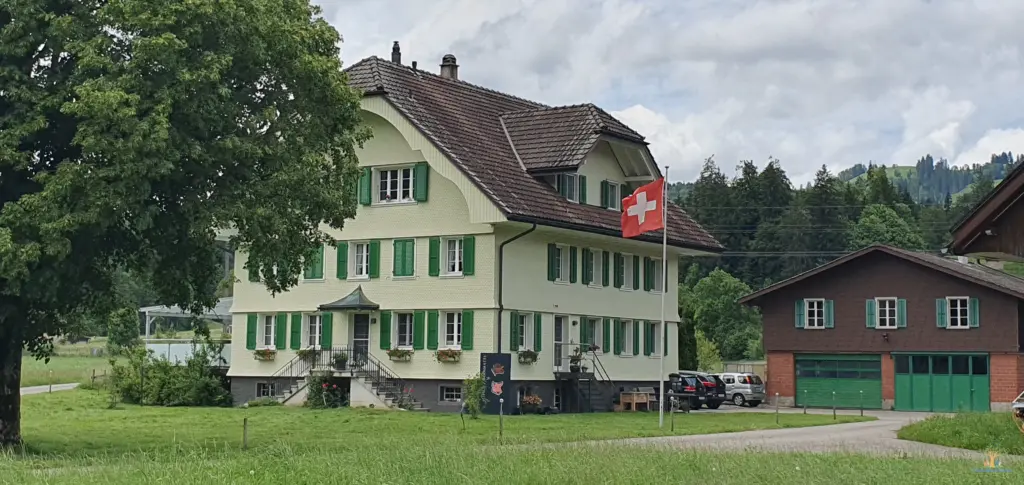
We drive through rolling countryside dotted with uniquely designed houses and lots of Swiss flags, and pull up in front of a building whose colourful pennants around the veranda strongly remind us of Pippi Longstocking’s Villa Villekulla:
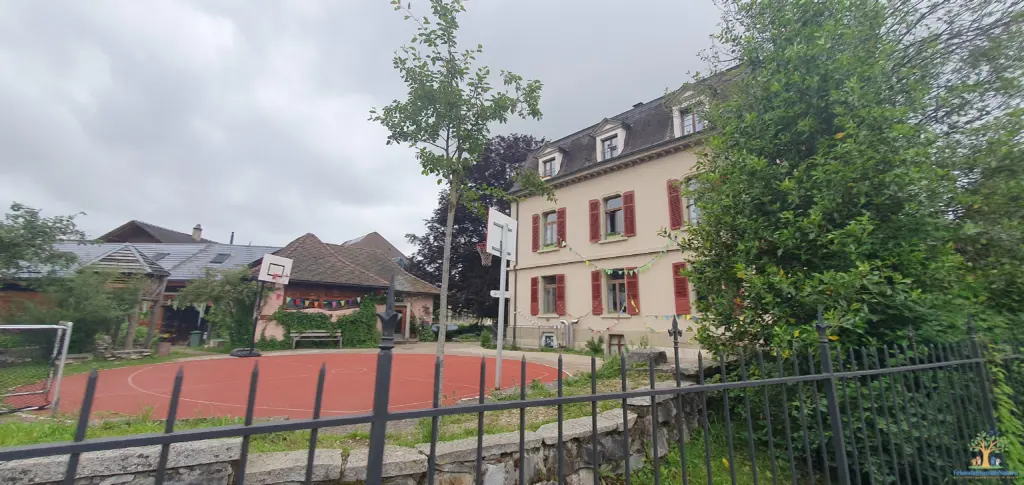
The headteacher, Ms Marianne Wey, gives us a warm welcome, accompanied by her dog ‘Shany’, and shows us round the enchantingly designed school building. We are allowed to look around the creative classrooms and find artistically designed blackboard displays created by the teachers to prepare the pupils for our workshop:
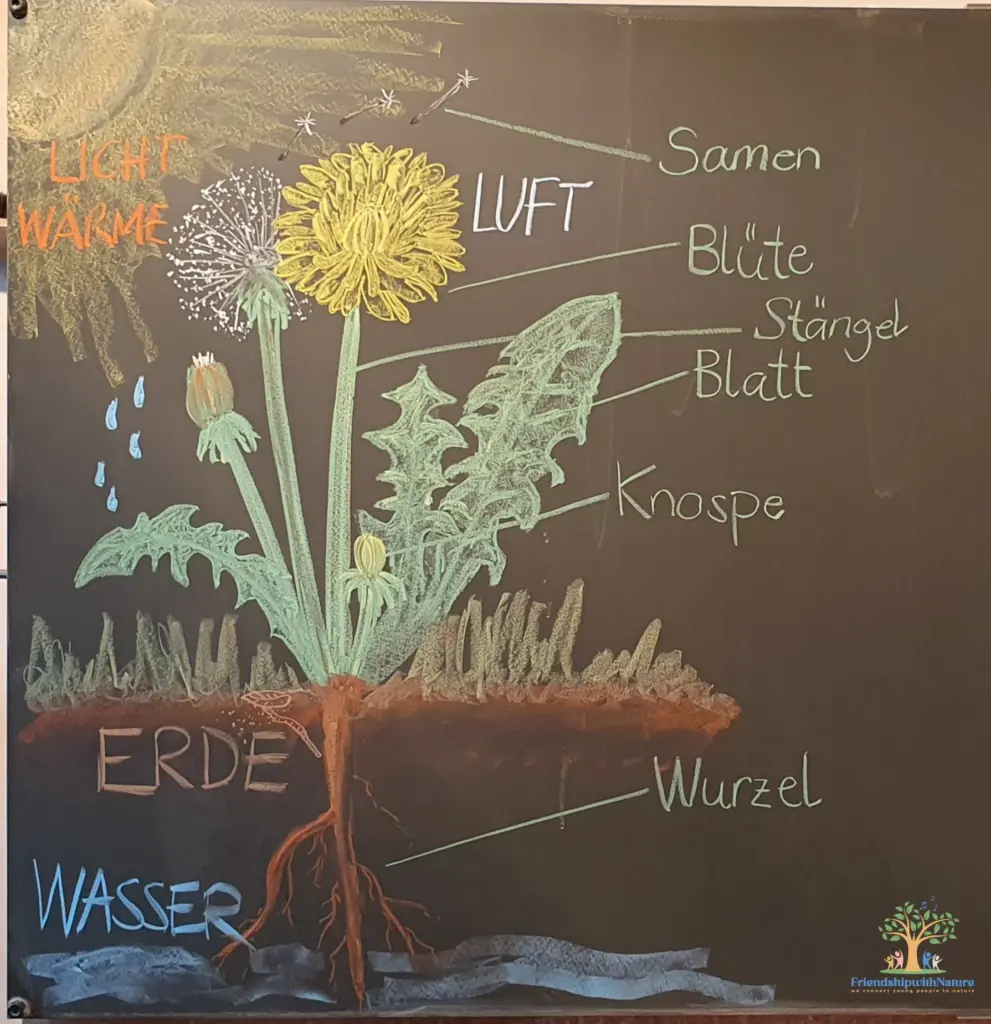
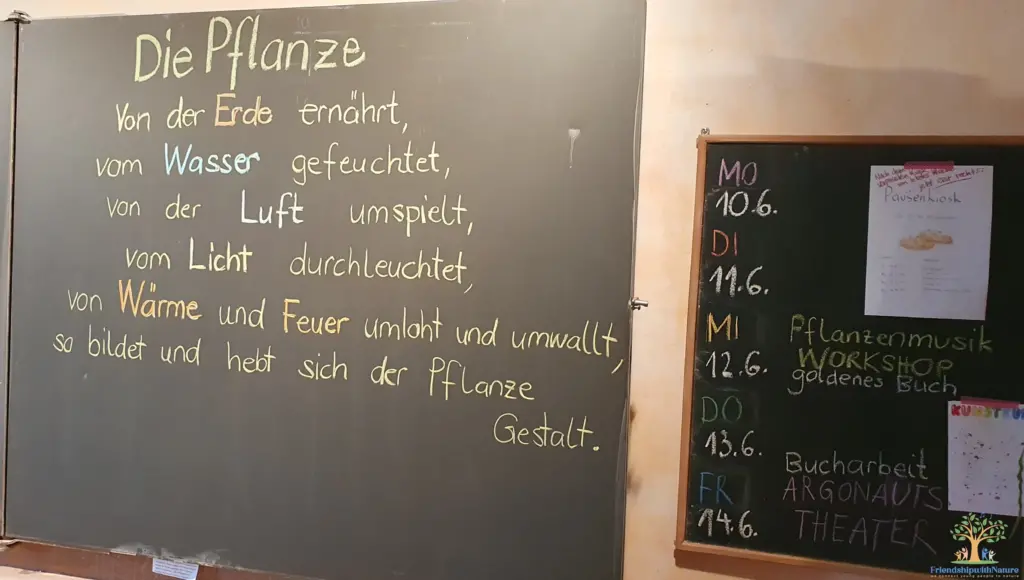
She then shows us the room for the workshop, under the roof of the annexe.
In the attic, which otherwise serves as an eurythmy hall, we find around 30 children aged 10–12 (Years 4–6) sitting in a circle of armchairs:
8.30–9.00 Christian MICHAEL, equipped with two larch wood discs and visual aids, presents the latest research findings in Swiss German on the carnivorous Venus flytrap, chameleon vines and how trees interact with one another in the forest. We learn that plants can even communicate with the world of fungi. Then it’s time for the children to get stuck into their own research:
9.05–9.25 ‘ei’s’ research group
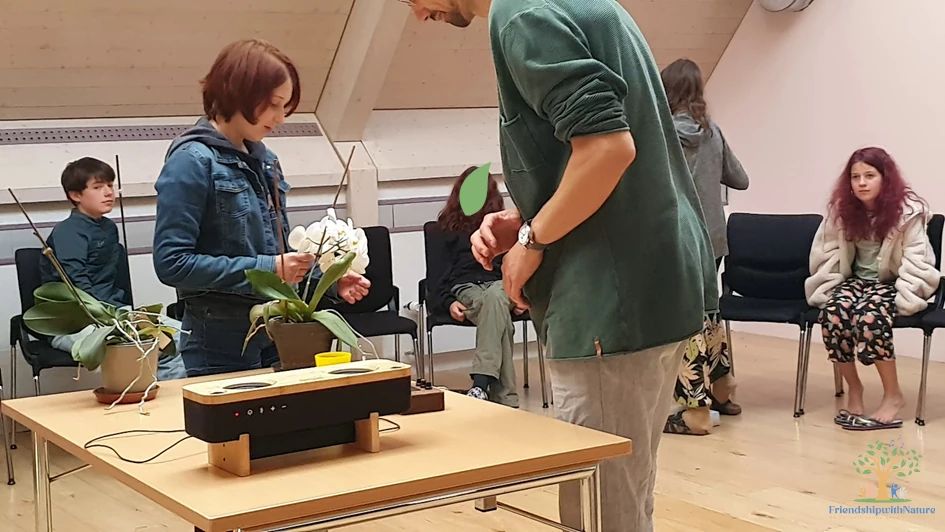
Each research group, comprising 7 or 8 children, experiments with the TreeMuse device, newly developed by Friendship with Nature and the Human Research Institute in Styria (Weiz, Austria). Everyone present can spend a few minutes trying it out for themselves, whilst the others are remarkably attentive: listening, observing and holding the space for the interaction between the music of the plant and the child or young person conducting the research in their midst.
9.25–9.45 Research group “zwoi”
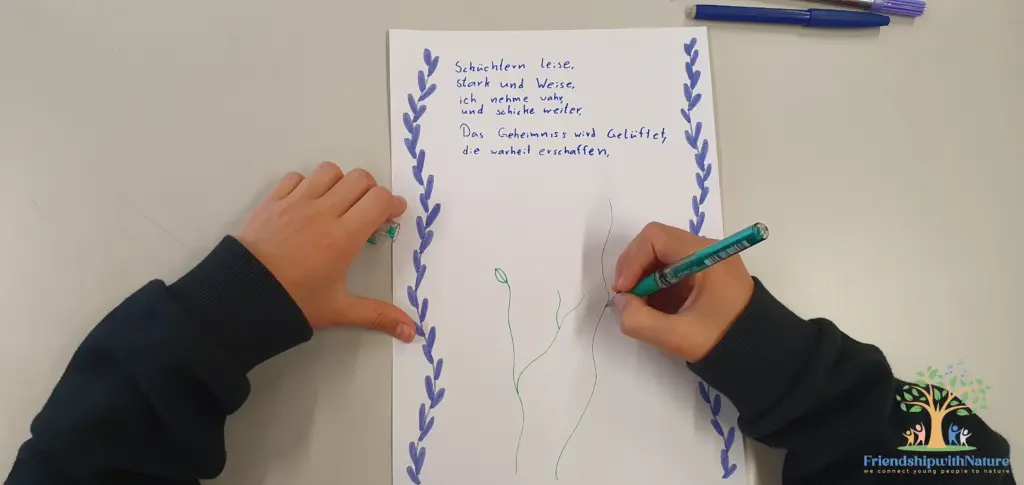
Meanwhile, the other research groups were processing their experiences and impressions on the floor below. A plant music device was playing there, connected to a houseplant, whilst the children and young people painted their impressions or wrote poems about what they had experienced.
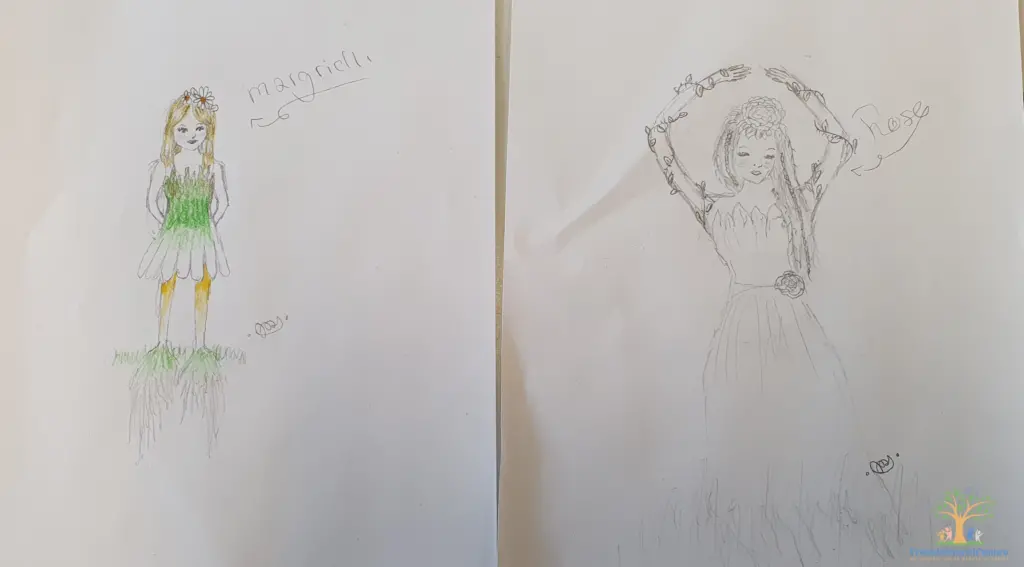
9.50–10.10 Break (Swiss: ‘z’Nüni’)
Lively discussion between the workshop leader and the teachers.
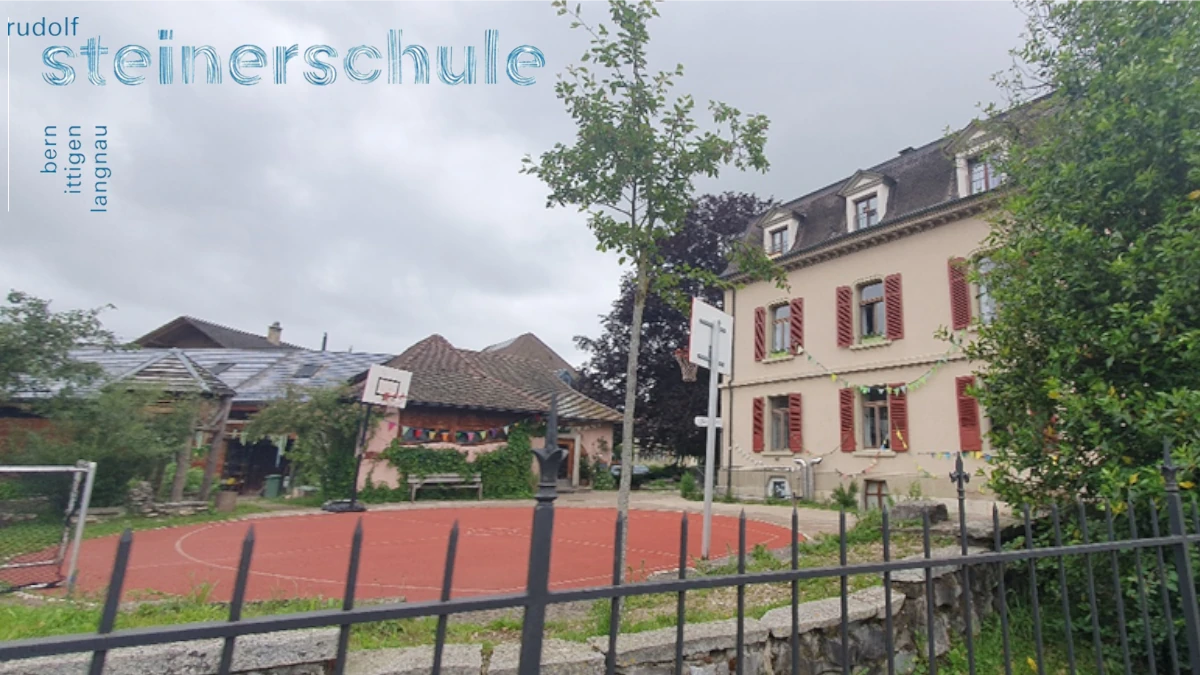
The children run around in the courtyard below, swing under the beech tree or play on their own sports pitch. In the school playground, upper-school pupils are selling homemade rosemary bread and spinach puff pastry rolls.
10.15–10.35 ‘drü’ research group
10.35–10.55 ‘via’ research group
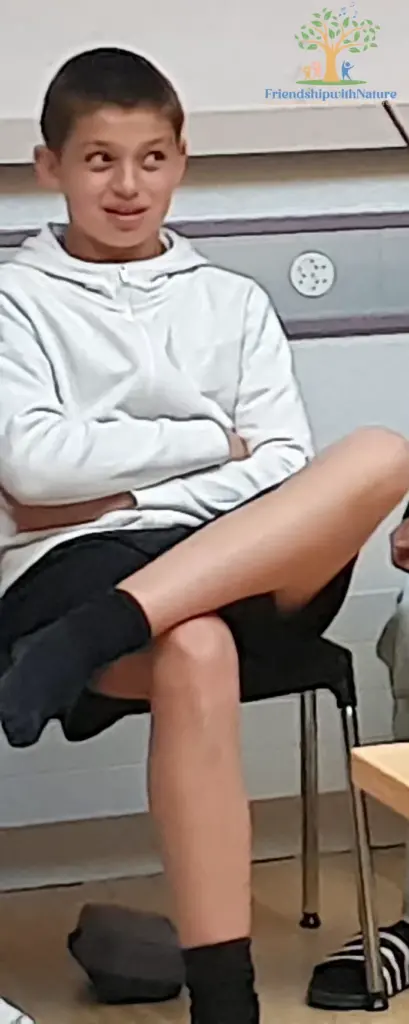 | After some initial scepticism as to whether these were simply pre-recorded music programmes, the children were enthusiastic about exploring, with each child spending around 3 minutes in contact with the plant. Singing, speaking, clapping, drumming and making music in interaction with the living creatures in the flower pots. Spontaneous improvisations, rhythmic variations and amusing ‘interjections’ from the two orchid plants, as well as the aloe vera – which a teacher from one of the classes had brought along – eventually won over even the last sceptic. |
During the experimental phase, the young people came up with ideas:
To tear the orchid’s head off To stroke
the plant To tear a leaf off the plant To water
the plant To swear at the plant To say
kind words to the plant To express feelings of rejection To play musical instruments for it
Intervention by Christian M.: “You can’t actually pluck off a flower or a leaf. But you can imagine it very vividly, think about it, get into the feelings and observe how the orchid reacts.”
One young person wanted to swear at the plant; it fell silent again.
Thoughts of harming the plant, as well as verbal abuse coupled with destructive intent, caused it to fall abruptly silent. Thereupon, loving feelings for the plant, communicated honestly and sincerely, brought it back to life.

This made a deep impression on the young people and also on the observers in the room.
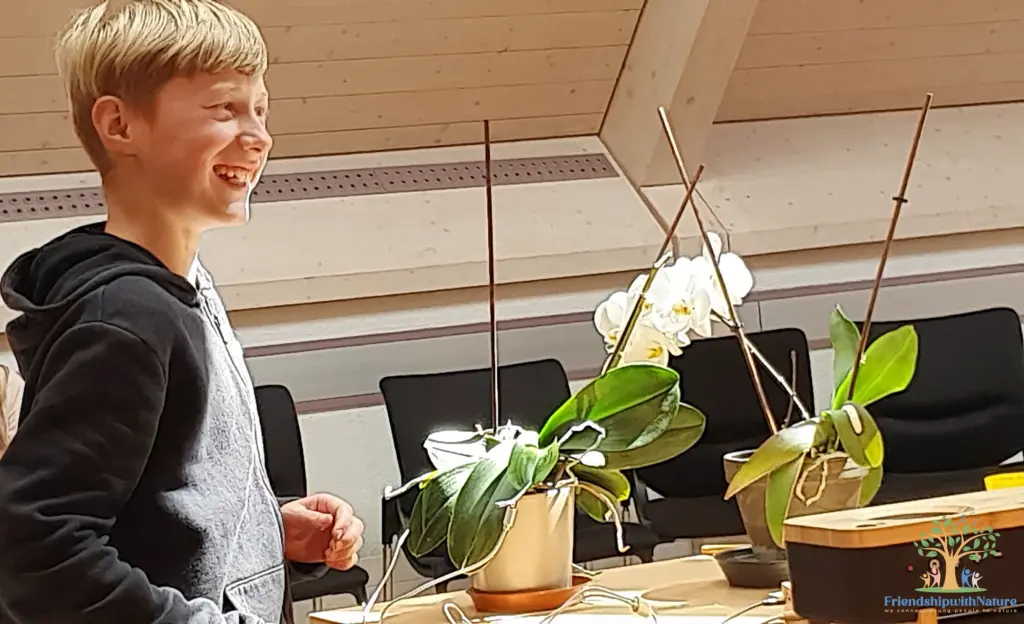
Communication with the plant, as a reflection of how we interact in the human world, in everyday school life and with classmates, was clearly experienced on several occasions during the workshop.
11.00–11.45 Joint conclusion *Listening to the music of the beech tree in the school garden *The teachers embrace the tree; we observe a change in the music, with deeper tones 1. Attempt to create a closed loop between the children and the school beech tree: The children stand hand-in-hand in a circle around the 200-year-old beech tree in the school garden. 2nd experiment in the classroom: Back indoors on the dry wooden floor, it became quite clear that as soon as one child let go of another’s hand, the circuit was broken and the plant fell silent. Experiment a success! *Each child was given the chance to say a few final words about the workshop: the reactions ranged from ‘so-so’ to ‘exciting’ to ‘Wow!’. | 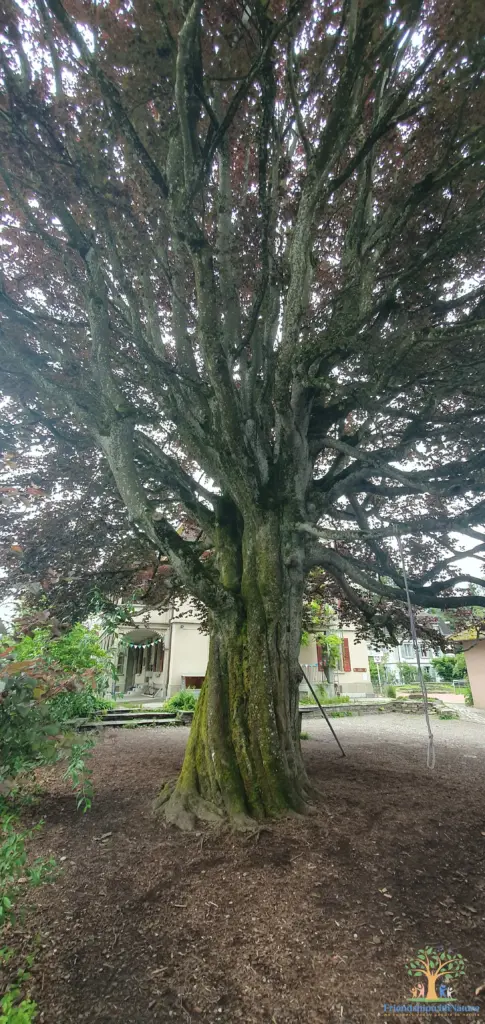 |
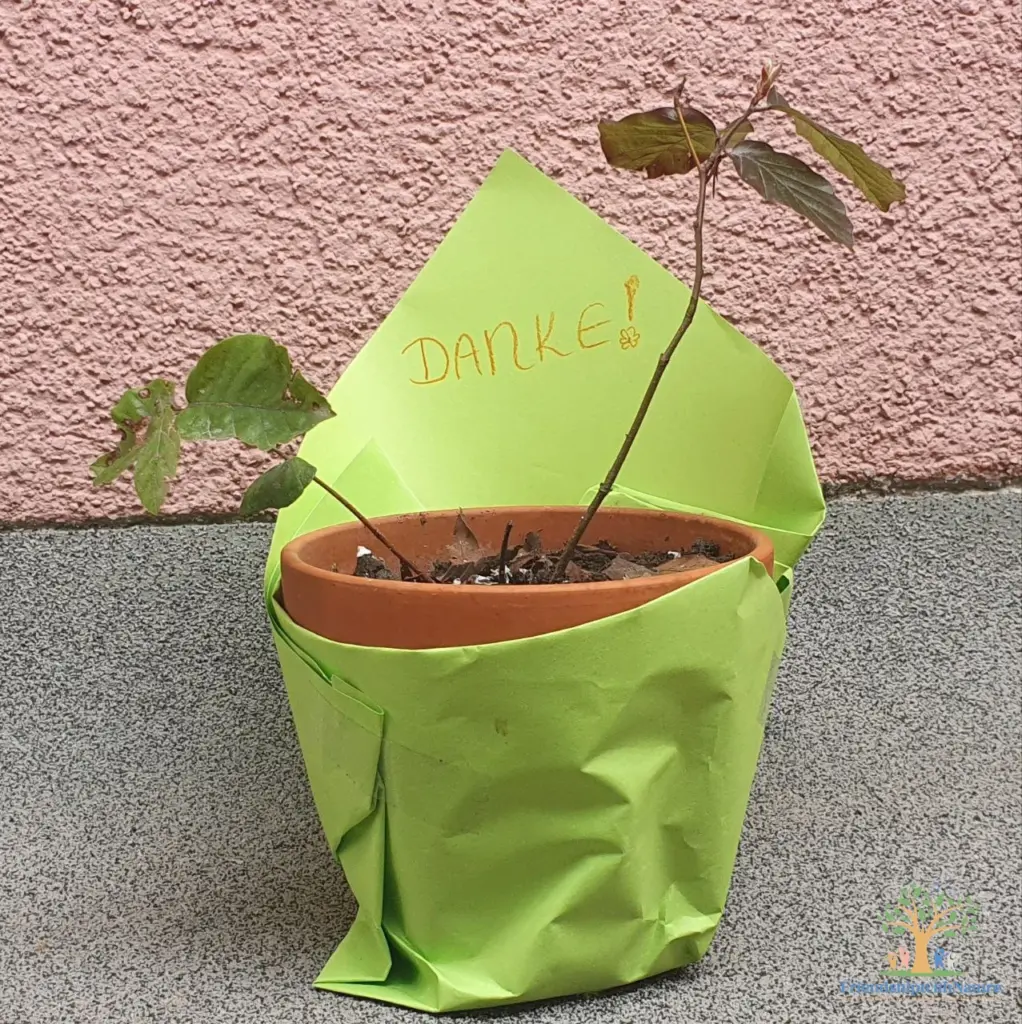
Two saplings from the 200-year-old beech tree in the school playground, presented by the Rudolf Steiner School in Langnau as a thank-you for the Friendship with Nature kick-off workshop.