Maximilian Moser – Professor of Physiology at the Medical University of Graz, author, Director of the Human Research Institute – Weiz, Austria


17 April 2024
The pupils were already eagerly awaiting what was to come and peering out of the classroom with curiosity when something happened that took us by surprise: two girls appeared in the corridor, each with an important role at the school: the dispute mediators. They were looking for a pupil who’d had a heated row with another girl.
Although they were only ten years old, they had already learnt how to mediate conflicts and were now setting about dealing with the two troublemakers. The teacher reported that this team of mediators was very successful whenever they took on a case.
Feldkirchen Primary School is run by a team of teachers who are passionate about their work. Following a preliminary meeting two months ago, we launched our first school project in Carinthia with the support of Software AG, crowdfunding from Wise on Ice and a grant from the Kärntner Sparkasse Private Foundation.
A dedicated and friendly camera crew accompanied us to document the project.
Once the excitement had died down a little, we entered the classroom and set up our wonderful equipment.
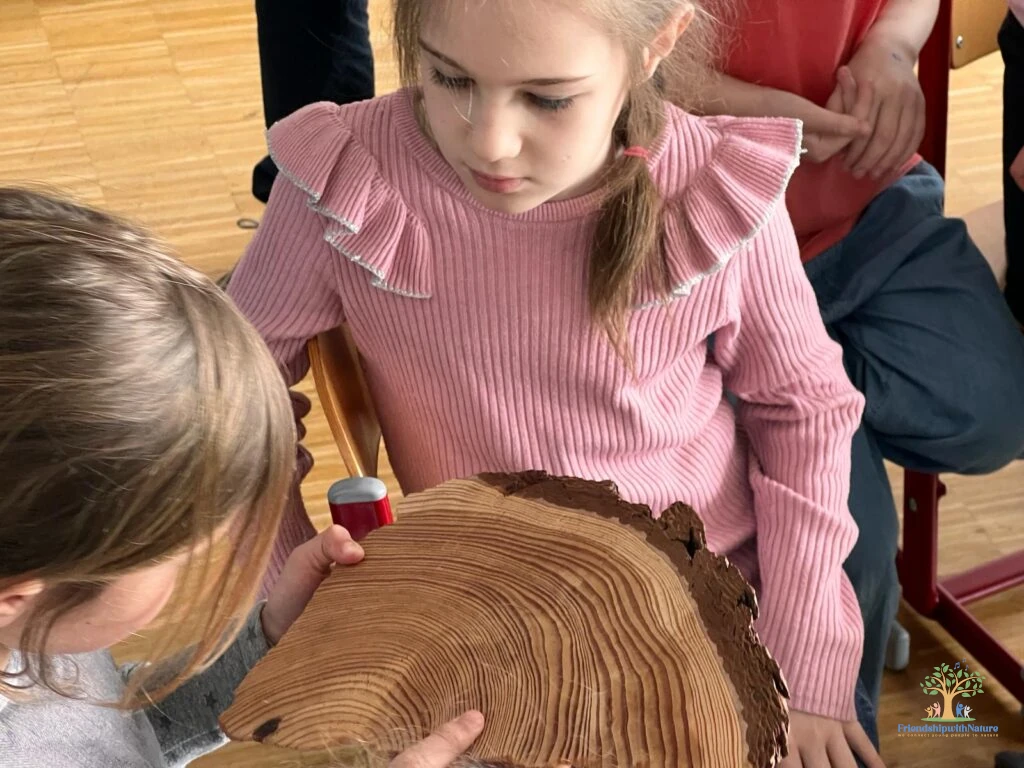
The annual rings – the biography of a tree
The pupils sat in a circle and I began by telling them about the life story of the larch tree, whose tree ring I had brought with me. The tree’s ‘fat’ and ‘lean’ years were clearly visible, and in conversation with the children we discussed how these had come about. The pupils were thoroughly enthusiastic and later, looking back, said that this had been one of the day’s special highlights.
A white orchid that makes music
Afterwards, the focus turned to a beautiful white orchid that had been blooming by the classroom window.
The pupils’ first task was to clean the plant; they did so with great dedication and in no time at all, as they were already looking forward to the music.
Once it had been cleaned spotless, we attached the TreeMuse’s electrodes, and the pupils waited with bated breath to hear what music would follow. When the first notes rang out, there was great excitement and amazement. Indeed, the plant played beautifully, and the pupils were deeply impressed.
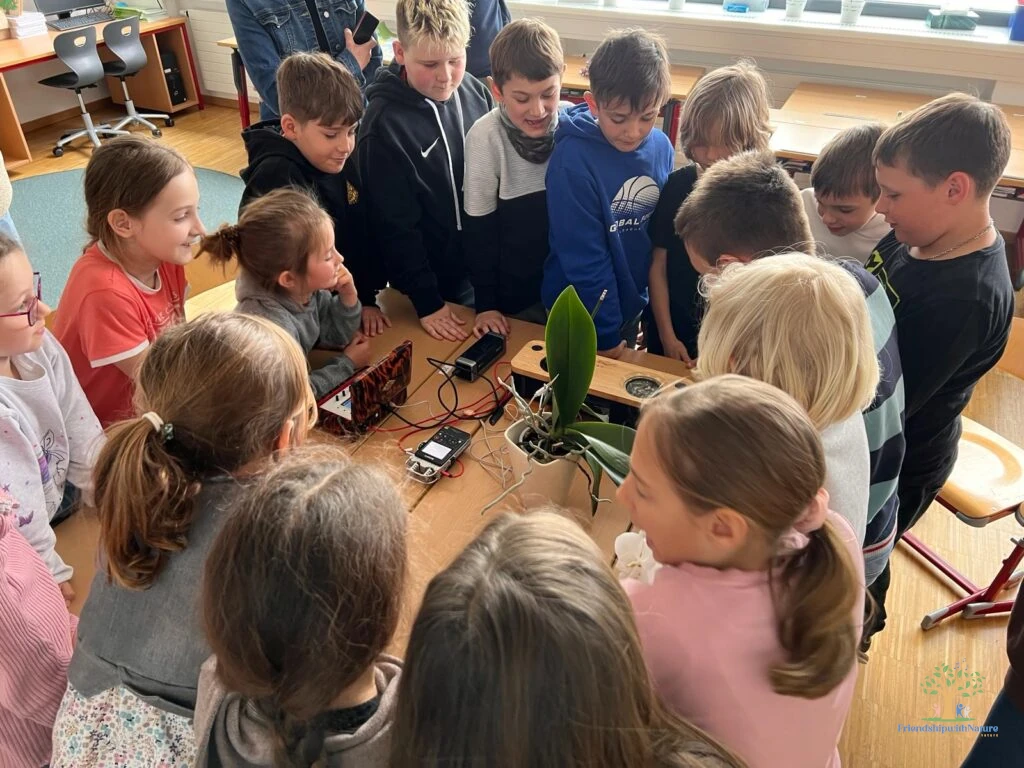
Looking back, a refreshingly cheeky pupil named Max said that he’d thought the whole thing was a complete hoax, but when he saw how the plant made music and that it stopped immediately when the electrodes were removed, he was convinced that we were really playing genuine plant music.
Plant music creates shapes
Now came the most exciting part of the project: visualising the plant music with the help of cymatic (kyma = Greek for ‘wave’) figures. We filled one of the cymatic bowls with Lycopodium spores, which then arranged themselves into fractal structures in time with the music.
The other dish was then filled with water. The pupils were clamouring to be allowed to fill the dishes. This kept them occupied for some time, as they listened and watched the plant’s movements with fascination.
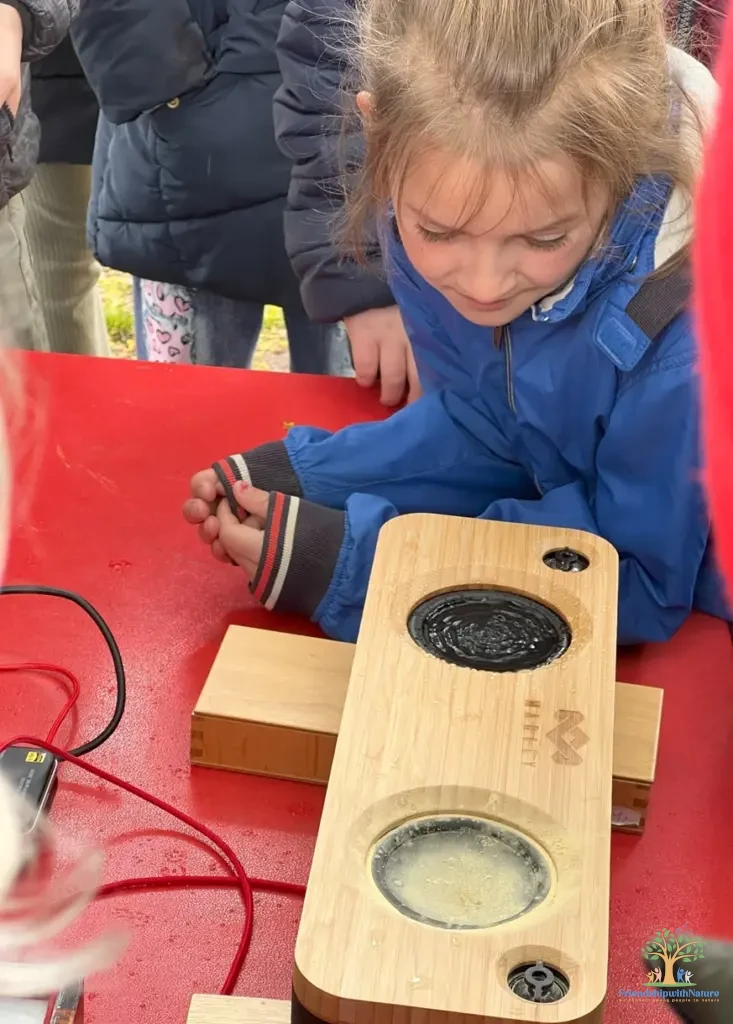
Afterwards, I showed them that we humans in a group can also create such rhythms; the pupils first joined hands and then encircled the plant within the circle of their hands. No sooner had the pupils’ movements settled down than the whole circle began to make music, and cymatic figures emerged from the group.
Can trees make music?
One of the pupils then asked whether trees could make music too, and we went outside to the children’s playground, where there was a beautiful old maple tree, which we fitted with electrodes. Now there was a sense of anticipation as to whether this tree would play too, and indeed – a more majestic sound than that of the orchid rang out.
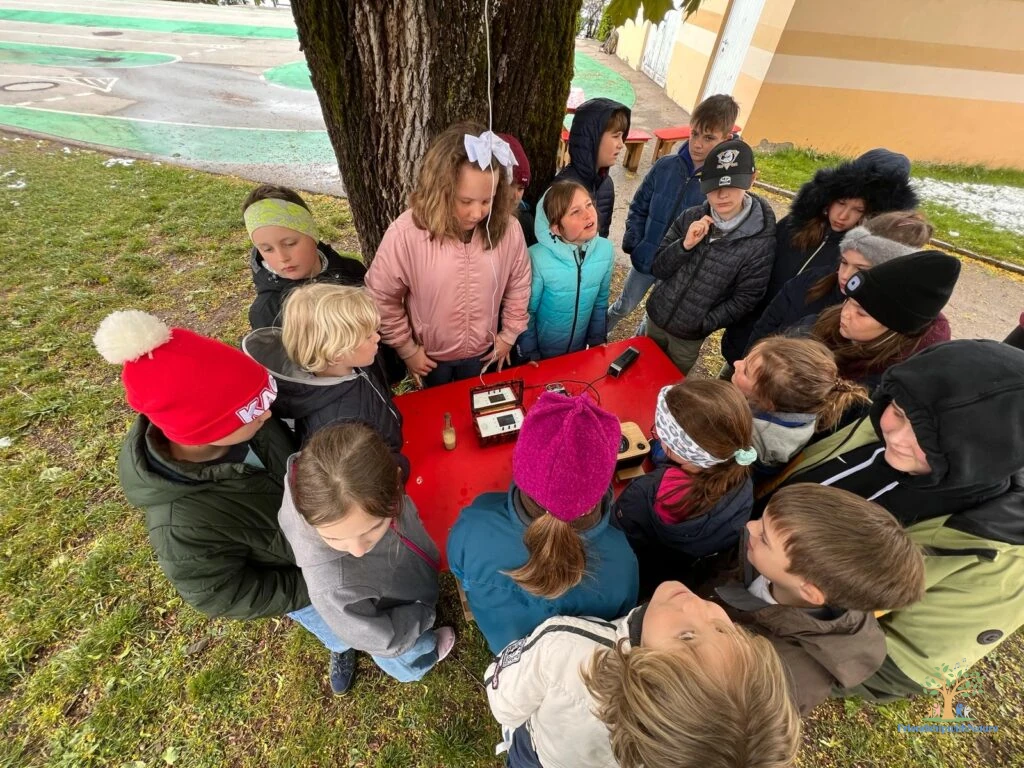
After the pupils had been experimenting for a while, they became increasingly keen to try new things and asked if they could put snow (it had snowed during the night) onto the cymatic plate, which sparked great excitement when I gave them permission.
After that, small stones were placed on it, which bounced around wildly, and some pupils said that this had been the most exciting part of the whole project.
Reflecting on the experience
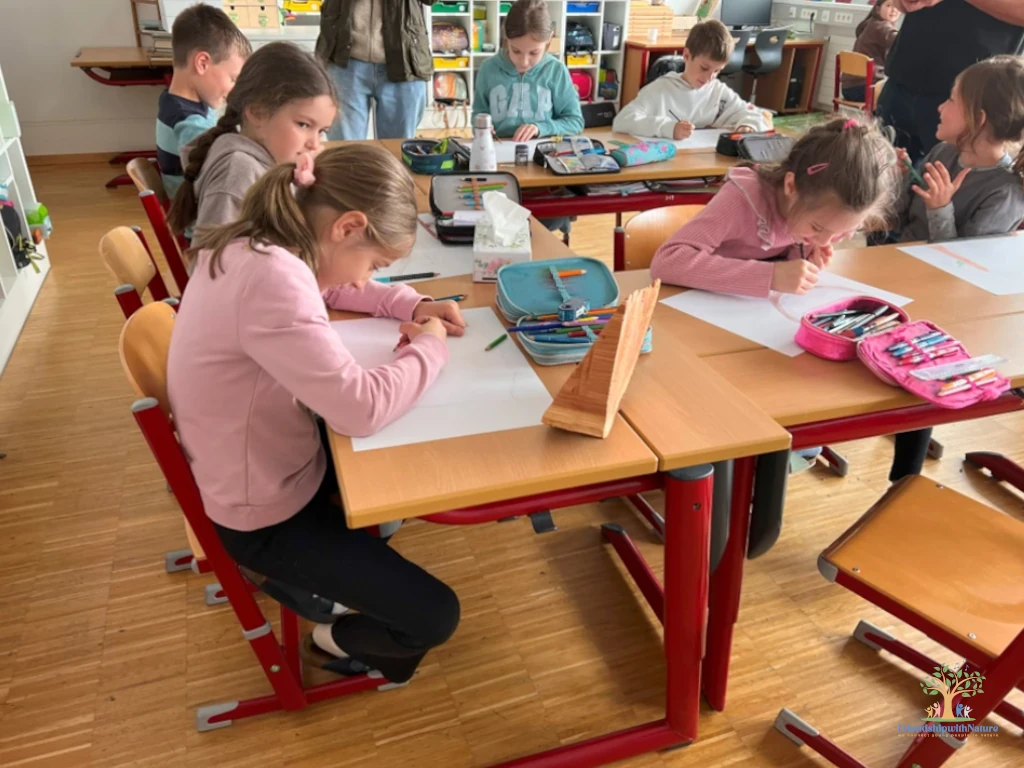
As the cold was getting to the children a little, we then headed back into the classroom, where the pupils shared their experiences in a closing session and expressed that they now perceived the plants much more intensely and were quite amazed at just how capable plants are.
The film crew said that the project would be ideal for a documentary and promised to enquire with a major Austrian TV channel to see if a documentary project might be possible.
Please click here to watch the film, which has since been produced:
A moving day came to an end, and the children are sure to remember this school day for the rest of their lives!
We would like to thank our sponsors:

SAGST Foundation

Kärntner Sparkasse Private Foundation

Wise on Ice
Logo: